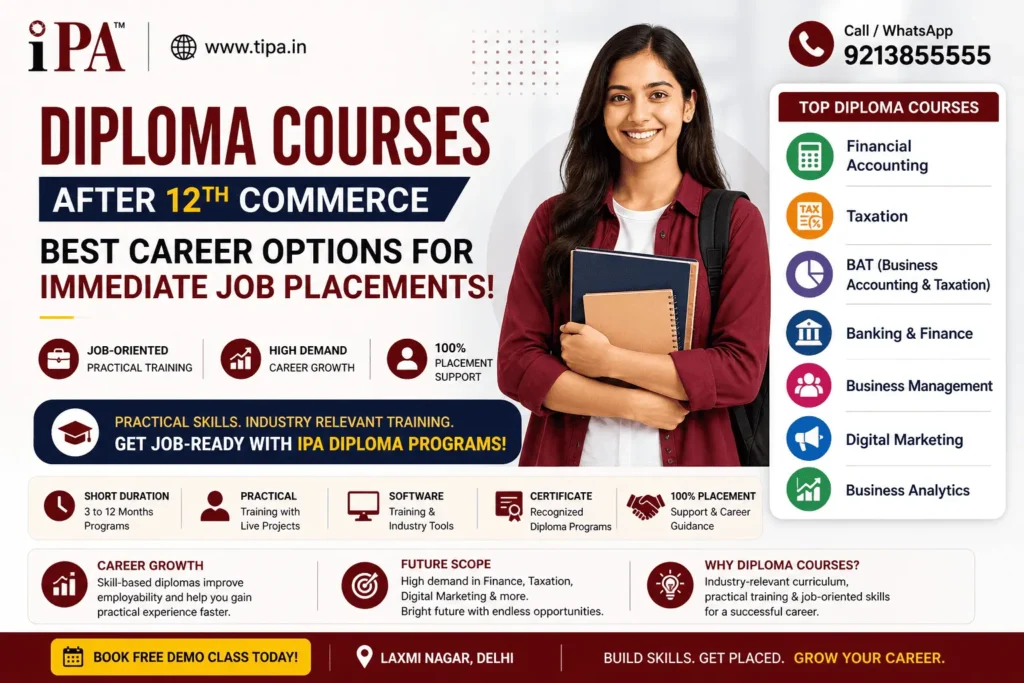
Why Choose a Diploma Program After Commerce?
Commerce students often look for practical career options after school. A degree is one route. However, many students prefer skill-based programs that lead to jobs faster. That is where diploma courses become valuable.
These programs focus on industry skills, professional training, and real-world applications. Moreover, they usually cost less than full-degree programs.
In this guide, you will explore the best diploma courses after 12th commerce, career prospects, eligibility, salaries, and selection tips.
Many students want to enter the workforce quickly.
A diploma course helps build job-ready skills in less time.
Furthermore, employers increasingly value practical expertise.
Here are some major benefits:
- Shorter course duration
- Lower education costs
- Industry-focused curriculum
- Faster job opportunities
- Flexible learning options
- Better specialization choices
In addition, diploma programs often include internships and project work.
As a result, students gain experience before applying for jobs.
Benefits of Skill-Based Commerce Certifications
Skill-oriented programs provide focused learning.
Instead of studying many subjects, students learn specific competencies.
Therefore, they become employable sooner.
Some key advantages include:
- Strong practical knowledge
- Better industry exposure
- Improved communication skills
- Professional networking opportunities
- Easier career transitions
Consequently, many students choose diplomas alongside graduation.
Top Diploma Courses for Commerce Students
Several diploma programs align perfectly with a commerce background.
Let’s examine the most popular choices.
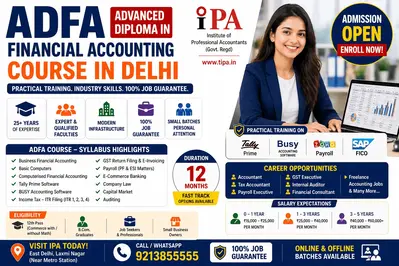
Diploma in Financial Accounting ADFA Course
Accounting remains one of the strongest career fields.
Businesses need qualified professionals to manage finances.
This diploma covers:
- Financial accounting
- Taxation basics
- GST concepts
- Auditing principles
- Financial reporting
Career Opportunities
Graduates may work as:
- Accounts Assistant
- Junior Accountant
- Tax Executive
- Finance Coordinator
Average Salary
Entry-level salaries typically range between ₹2.5 lakh and ₹5 lakh annually in India.
Diploma in Banking and Financial Services
The banking sector offers stable career opportunities.
This program introduces banking operations and financial products.
Students learn:
- Retail banking
- Financial markets
- Loan processing
- Risk management
- Customer relationship management
Career Opportunities
Possible roles include:
- Banking Associate
- Loan Processing Executive
- Financial Service Representative
- Operations Executive
Diploma in Business Management
Business management provides broad commercial knowledge.
This diploma develops leadership and organizational skills.
Topics usually cover:
- Business communication
- Human resource management
- Marketing fundamentals
- Entrepreneurship
- Operations management
Career Opportunities
Graduates can pursue:
- Management Trainee
- Business Development Executive
- Operations Coordinator
- Sales Executive
Diploma in Financial Accounting with Tally
Tally remains widely used across Indian businesses.
This diploma combines accounting concepts with software training.
Students learn:
- Tally Prime
- GST filing
- Payroll management
- Inventory management
- Financial statements
Career Opportunities
Common roles include:
- Tally Operator
- Accounts Executive
- Payroll Assistant
- Bookkeeping Specialist
Diploma in Taxation
Taxation experts help businesses remain compliant.
Therefore, demand remains consistent.
Core subjects include:
- Direct taxes
- Indirect taxes
- GST regulations
- Tax planning
- Compliance procedures
Career Opportunities
Students may work as:
- Tax Assistant
- GST Executive
- Compliance Associate
- Tax Consultant Assistant
Diploma in Human Resource Management
Human resources play a critical role in organizations.
This diploma focuses on workforce management.
Major topics include:
- Recruitment
- Employee relations
- Payroll administration
- Labor laws
- Performance management
Career Opportunities
Graduates often secure positions such as:
- HR Assistant
- Recruitment Coordinator
- Talent Acquisition Executive
- Payroll Executive
Diploma in Event Management
Event management suits students with strong organizational abilities.
The industry includes corporate events, weddings, exhibitions, and conferences.
Students learn:
- Event planning
- Vendor management
- Budgeting
- Marketing
- Client servicing
Career Opportunities
Popular roles include:
- Event Coordinator
- Event Planner
- Client Servicing Executive
- Venue Manager
Diploma in E-Commerce
Online business continues to expand worldwide.
Consequently, companies need professionals who understand digital selling.
Subjects generally include:
- Online retail operations
- Marketplace management
- Product listing
- Digital payments
- Customer experience
Career Opportunities
Students may become:
- E-Commerce Executive
- Marketplace Specialist
- Catalog Manager
- Online Sales Coordinator
Diploma in Hotel Management
Commerce students interested in hospitality can explore this field.
The industry values customer service and business knowledge.
Areas covered include:
- Front office operations
- Food service management
- Hospitality marketing
- Guest relations
Career Opportunities
Graduates may work as:
- Front Office Executive
- Guest Service Associate
- Hospitality Coordinator
- Restaurant Supervisor
How to Select the Right Diploma Course
Choosing the right program requires careful evaluation.
Several factors should influence your decision.
Identify Your Interests
First, understand your strengths.
For example, analytical students may enjoy accounting.
Meanwhile, creative students may prefer marketing.
Review Career Demand
Research industry trends before enrolling.
Growing sectors often provide better employment opportunities.
Examples include:
- Digital marketing
- Financial services
- E-commerce
- Data analytics
Check Course Curriculum
Always review the syllabus.
A practical curriculum offers stronger industry relevance.
Look for:
- Projects
- Case studies
- Internships
- Software training
Verify Institution Credibility
Choose recognized institutions.
Accredited programs usually attract greater employer trust.
Additionally, verify placement records whenever possible.
Career Scope After Commerce Diplomas
Many students wonder about long-term growth.
The answer depends on skill development and performance.
A diploma can serve as:
- A direct career pathway
- A specialization tool
- A stepping stone toward higher studies
Many professionals combine diplomas with bachelor’s degrees.
Consequently, they improve employability and earning potential.
Salary Expectations Across Popular Diploma Fields
Salary varies by location, organization, and skill level.
Here is a general overview for beginners in India.
Diploma Field | Average Annual Salary |
Accounting and Finance | ₹2.5–5 lakh |
Banking and Finance | ₹2.5–5.5 lakh |
Human Resources | ₹2.5–5 lakh |
E-Commerce | ₹3–6 lakh |
Event Management | ₹2.5–5 lakh |
Hotel Management | ₹2–5 lakh |
These figures may increase with certifications and experience.
Common Mistakes Students Should Avoid
Students often rush decisions after school.
However, careful planning produces better outcomes.
Avoid these mistakes:
- Choosing courses based only on popularity
- Ignoring career prospects
- Overlooking institution quality
- Neglecting internships
- Skipping industry research
Instead, align education with career goals.
Future Trends Shaping Commerce Careers
The employment landscape continues to evolve.
Several trends will influence future opportunities.
Automation and Financial Technology
Fintech companies continue transforming financial services.
Therefore, finance professionals need digital skills.
Growth of Online Business
E-commerce expansion creates demand for specialists.
This trend shows no signs of slowing.
Data-Driven Decision Making
Businesses increasingly rely on analytics.
As a result, analytical skills remain highly valuable.
Digital Customer Engagement
Organizations now prioritize online customer interaction.
Consequently, marketing and communication expertise stay relevant.
Conclusion
Selecting the right diploma after commerce can accelerate career growth.
These programs provide practical knowledge and industry exposure.
Moreover, they help students enter professional environments quickly.
Accounting, banking, digital marketing, human resources, e-commerce, and business management remain strong choices.
However, the best option depends on your interests and career objectives.
Before enrolling, compare curricula, placement support, industry recognition, and future demand.
A thoughtful decision today can create lasting professional opportunities tomorrow.
FAQs
Which diploma course is best after 12th commerce?
The best course depends on your career goals. Accounting, digital marketing, banking, and business management remain highly popular due to strong employment demand.
Can I get a job after completing a diploma course?
Yes, many diploma programs prepare students for entry-level roles. Practical training often improves employability.
What is the duration of most commerce diploma courses?
Most diploma programs last between six months and two years. Duration varies by institution and specialization.
Is digital marketing a good option for commerce students?
Yes, digital marketing offers growing opportunities. Commerce students often understand business concepts that support marketing success.
Can I pursue a degree along with a diploma?
Yes, many students complete diploma programs alongside bachelor’s degrees. This combination strengthens both theoretical and practical knowledge.
Which diploma offers the highest salary potential?
Digital marketing, financial services, data analytics, and specialized finance diplomas often provide strong salary growth with experience and certifications.
Are diploma courses recognized by employers?
Yes, employers value reputable diploma programs that provide relevant skills, software training, and practical experience.
References
- National Skill Development Corporation (NSDC)
URL: https://www.nsdcindia.org - National Career Service (Government of India)
URL: https://www.ncs.gov.in - All India Council for Technical Education (AICTE)
URL: https://www.aicte-india.org - Ministry of Skill Development and Entrepreneurship
URL: https://www.msde.gov.in - World Economic Forum – Future of Jobs Reports
URL: https://www.weforum.org/reports - U.S. Bureau of Labor Statistics Occupational Outlook Handbook
URL: https://www.bls.gov/ooh
These sources provide career trends, employment insights, skill requirements, and industry outlook information relevant to diploma-level education and commerce careers.
, Author Mr. Sanjeev is a taxation trainer and accounting educator with experience in GST, income tax, and financial compliance training. Connect IPA at